

3 effective ways to reduce card transaction fees
Card transaction fees are part of the cost of accepting card payments. For Australian businesses, reviewing how card payments are priced and processed may help identify opportunities to reduce payment acceptance costs.
Three ways businesses may be able to reduce card transaction fees are:
- Review their card payment pricing model and interchange-related costs.
- Use least cost routing for eligible debit card transactions.
- Compare payment providers based on total payment acceptance costs, not only the advertised transaction rate.
The potential savings from each approach will depend on factors such as transaction volume, card mix, transaction type, pricing arrangements and the payment services you use.
1. Assess the current interchange fee model
An interchange fee 1 is a fee paid between financial institutions when a card transaction is processed. During a card transaction, your bank will pay a customer’s bank a fee, and this cost is passed onto your business by your processor. The amount you pay is dependent on a number of factors such as your industry, and whether it was a card present (CP) or non-card present (NCP) transaction.
Pricing models, including interchange-plus, flat rate, or tiered, each offer distinct advantages depending on a business’s size, transaction mix, and volume. Businesses looking to reduce card transaction fees can review their current pricing arrangement and merchant statements to understand:
- the transaction fees they currently pay;
- which card and transaction types account for those costs;
- whether other fees apply to their payment service; and
- whether their current pricing model remains appropriate for their transaction mix and volume.
Reviewing your pricing structure can improve transparency and help identify potential cost efficiencies.
2. Least cost routing
Least cost routing (LCR) can help reduce the cost of accepting some debit card payments by routing eligible transactions through a lower-cost available network.
The Reserve Bank of Australia (RBA) has defined least cost routing as a function which “provides merchants the ability to override the default network and route contactless Dual Network Debit Card (DNDC) transactions via whichever of the two networks on the card costs them less to accept”. In Australia, these networks are typically eftpos and either Visa Debit or Mastercard Debit.
For a business, this means that least-cost routing could reduce transaction costs by processing transactions via networks that offer the lowest available cost.
Read this article to learn more about least cost routing and the benefits it can bring to businesses.
3. Compare payment providers and understand your fees
With card surcharging being removed, understanding the underlying cost of accepting payments becomes even more important.
Consider reviewing your merchant statements and looking at the fees associated with different card types and transactions. Comparing pricing between payment providers may also help you determine whether your current arrangement remains competitive for the way your customers pay.
When comparing providers, look beyond the headline transaction rate. Depending on the provider and product, other costs could include terminal rental, account or service fees and fees associated with particular transaction types.
The lowest advertised transaction rate will not necessarily result in the lowest overall payment cost for every business. Your transaction volume, card mix and the services you need should also form part of the comparison.
How Tyro Tap & Save may help reduce transaction fees
Tap & Save
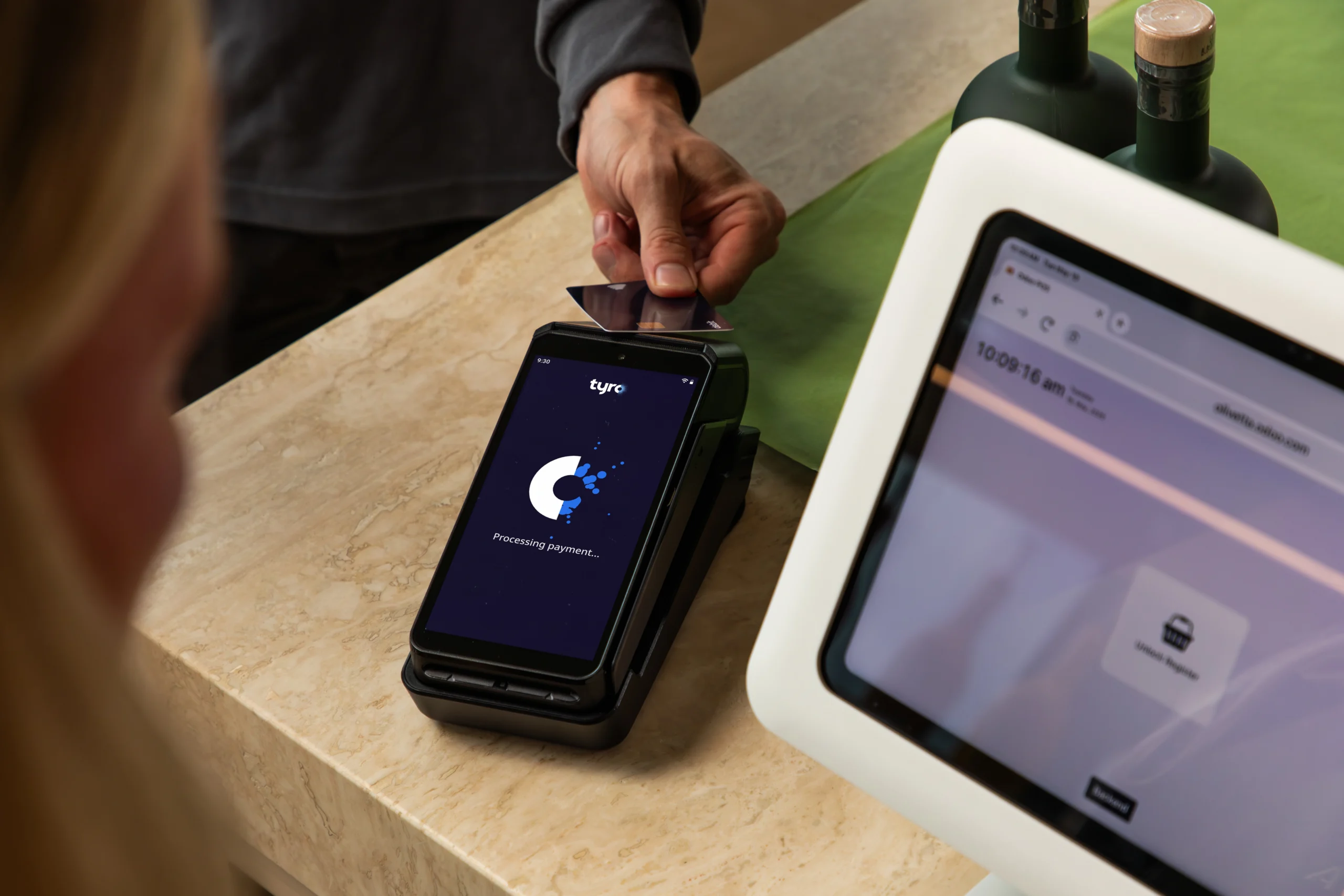
Tyro’s Tap & Save 2 is Tyro’s least cost routing solution for eligible transactions.
With the simple tap of a customer’s card, eligible transactions are automatically routed to the cheapest available network, reducing the overall transaction fee, directly improving business’s margins and profitability.
Learn more about Tyro Tap & Save.
Final thoughts on reducing card transaction fees
Reducing card transaction fees can be an effective way of increasing profitability almost immediately.
Reviewing your pricing model, especially as transaction volumes increase, and least cost routing is often something that merchants may not be aware of, yet can be an effective way to reduce fees.
With Tyro on hand to support, and features such as Tap & Save 2 you can better manage your transaction costs and stay focused on what matters most: growing your business 3.
Handle Payments, Your Way
The portable payment solution, with both a touchscreen and glove-friendly keypad.



 Get the help you need