
What’s the difference between a secured and unsecured business loan?
The main difference between a secured and unsecured business loan is whether an asset is used as security. A secured business loan is backed by an asset, while an unsecured business loan generally doesn’t require a specific asset as collateral.
In this guide, we explain how secured and unsecured business loans work, their potential benefits and considerations, and what to compare when deciding which option may suit your business.
What is a secured business loan?
A secured business loan uses an asset as security for the loan. That asset helps reduce the lender’s risk if the loan isn’t repaid.
Common assets used as security may include:
- Real estate property;
- business vehicles;
- plant and machinery;
- equipment; or
- other valuable business assets accepted by the lender.
Examples of secured business loans
You might use a secured loan if you:
- Borrow against your real estate property
- Use a fleet of business vehicles as security
- Finance new manufacturing equipment using existing machinery as collateral
Because the lender has security over an asset, secured loans may offer lower interest rates, larger borrowing amounts or longer repayment terms than some unsecured loans. However, if you can’t meet your repayment obligations, the secured asset may be at risk.
What is an unsecured business loan?
An unsecured business loan doesn’t require you to provide a specific asset as collateral.
Instead, lenders will usually look at factors such as:
- Business cash flow
- Turnover
- Trading history
- Credit profile
- Repayment capacity
- Industry type
- Overall business performance
Unsecured business loans may suit your business if you do not want to use real state property, equipment or vehicles as security.
They may also be useful where you want a simpler application process or faster access to funds. However, unsecured loans may have higher costs, shorter repayment terms or lower borrowing limits than secured loans.
Examples of unsecured business loans
- merchant cash advance-style finance, where repayments are linked to future sales
- business lines of credit, where a business can draw from an approved credit limit;
- short-term unsecured business loans, where no specific asset is pledged as collateral;
- peer-to-peer business loans, where a business borrows through a lending platform.
Secured vs Unsecured business loans
| Feature | Secured loan | Unsecured loan |
|---|---|---|
| Security | Requires an asset | No specific asset required |
| Application | Longer application process | Can be quicker |
| Borrowing amount | Larger loan amounts | Limitations on the amount of money that can be borrowed |
| Interest or fees | Lower interest rates or fees, depending on the lender | May be higher |
| Repayment terms | Longer repayment terms | Shorter and more flexible repayment terms |
| Risk | Asset may be at risk if repayments aren’t met | No specific asset is pledged as collateral.
A personal guarantee may be required, and recovery may be sought under that guarantee if repayments aren’t met. |
Risk
The main difference between a secured and unsecured business loan is whether the loan is backed by collateral.
With a secured loan, the borrower provides an asset as security. This may reduce the lender’s risk and may improve the borrower’s access to certain loan options, depending on the lender’s criteria.
In the case of an unsecured loan, the lender takes on more risk as there is no asset security in case a borrower has difficulty making repayments and is unable to pay the loan back.
Application process
Secured business loans can involve a longer application process because the lender may need to assess or value the asset being used as security.
With unsecured business loans, there is typically a faster application process because there is no specific asset valuation.
In many cases, the decision for an unsecured loan can be made within a few hours, assessing an application using business revenue, cash flow, turnover and trading history.
Interest rates
Secured business loans may offer lower interest rates because the lender has security over an asset.
Unsecured business loans may have higher rates or fees because the lender is not relying on a specific asset as collateral. However, the total cost of borrowing depends on the lender, loan structure, repayment term, fees, borrower profile and product terms.
Flexibility
Some unsecured business loans may offer more flexible repayment options, depending on the lender and product terms. For example, repayments may be linked to business revenue or daily sales.
Some secured loans may have fixed repayment terms, early repayment fees or restrictions on additional repayments. These terms vary by lender, so businesses should check the loan agreement carefully before applying.
Which type of business loan may suit your business?
A secured business loan may be worth considering if your business:
- has assets available to use as security;
- wants to borrow a larger amount;
- prefers a longer repayment term;
- is comfortable using an asset as collateral.
An unsecured business loan may be worth considering if your business:
- does not want to provide a specific asset as security;
- wants a faster or simpler application process;
- needs short-term working capital;
- prefers a repayment structure that may align with cash flow.
The right choice depends on your business’s revenue, cash flow, assets, repayment capacity, borrowing needs and eligibility.
How Tyro Flexi Loan works
Tyro Flexi Loan is an unsecured business lending option available to Tyro merchants.
Instead of a traditional interest-rate structure, Tyro Flexi Loan has a one-off loan fee.
Eligible approved merchants may be able to:
- Access funding in as little as 60 seconds 1
- Borrow up to $400,000 2
- Choose what percentage of daily EFTPOS takings goes towards repayments
Because repayments adjust with your daily sales, you’ll generally repay more when business is busy and less during quieter periods 2.
This may help repayments better align with cash flow compared with fixed repayment structures.
Ready to grow your business?
If you’ve got business assets and need to borrow a larger amount over a longer period, a secured loan could be worth exploring.
If you’re looking for speed, flexibility and a simpler application process, an unsecured loan may be worth considering.
At Tyro, we’re proud to offer Tyro Flexi Loan 2, an unsecured lending option for eligible businesses. With no early repayment charges and repayments based on a percentage of your daily EFTPOS takings, it offers a flexible way to access funding while helping repayments align with your cash flow.
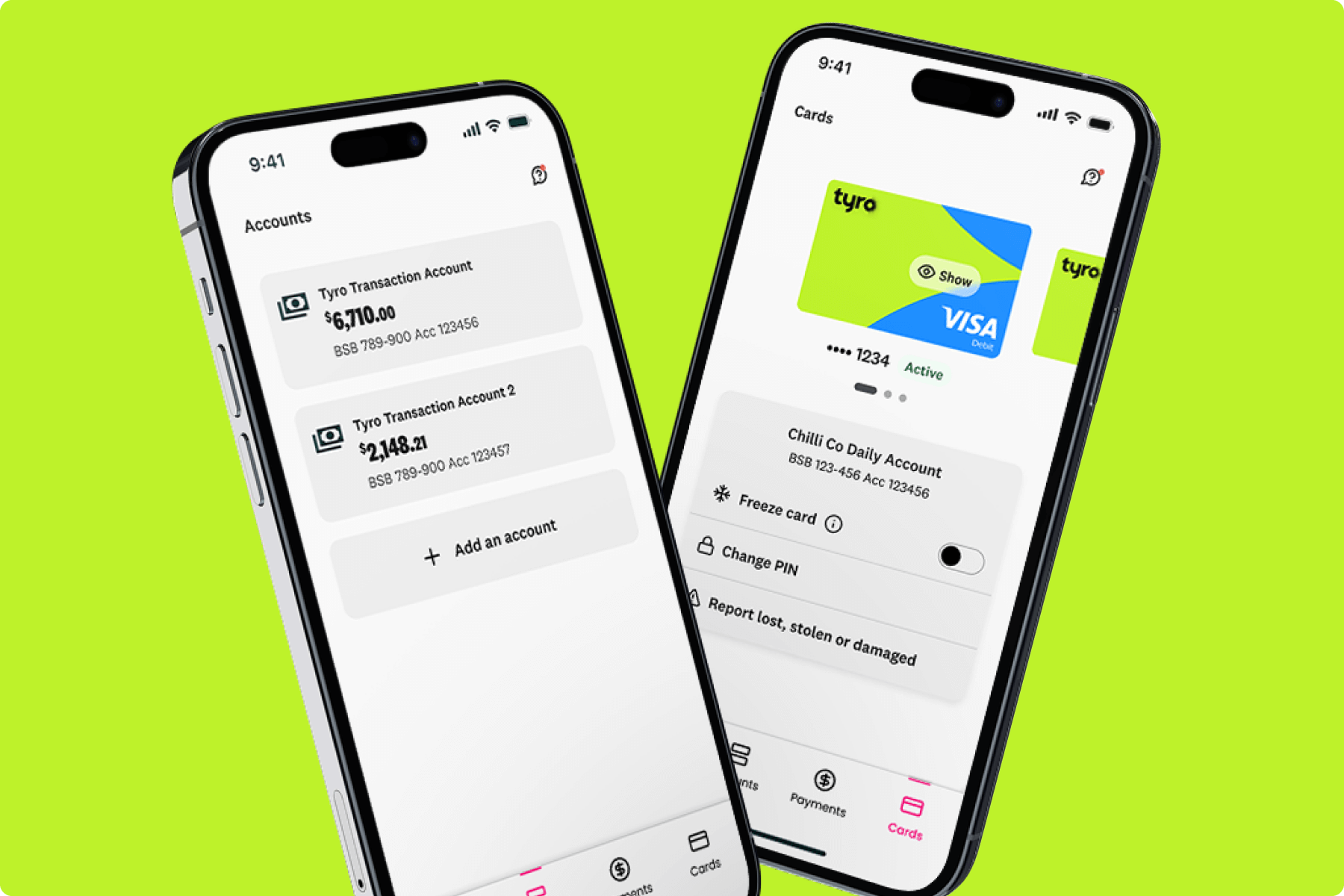
Get up to $1,000 cashback on your loan fee 4
Manage Payday Super or bridge the cash flow gap with fast, flexible funding 5.
Cashback applied after loan is repaid in full.


 Get the help you need