










5 Reasons Tyro’s Enterprise Payment Solutions Are Built for Australian Businesses

Business Strategies

A smooth customer experience is a non-negotiable for any Australian business, along with a lower transaction fee for payments, especially as competition continues to increase at a rapid pace. With more consumers moving away from cash payments, a secure, convenient, and cost effective card payment system is a necessity for businesses. Not only does it reduce friction and make the payment process easy for customers, it can directly impact your business’s margins and profitability.
Giving customers the choice to pay via EFTPOS machines as an example is a great start, but to truly maximise profitability, businesses should take a broader view and explore multiple strategies to reduce card transaction fees across the board.
Let’s take a look at the three effective ways you could reduce card transaction fees, and improve your bottom line.
During a card transaction, your bank will pay a customer’s bank a fee, and this cost is passed onto your business by your processor, and is known as an interchange fee *. The amount you pay is dependent on a number of factors such as your industry, and whether it was a card present (CP) or non-card present (NCP) transaction.
Pricing models, including interchange-plus, flat rate, or tiered, each offer distinct advantages depending on a business’s size, transaction mix, and volume. Reviewing your pricing structure can improve transparency and help identify potential cost efficiencies.
The Reserve Bank of Australia (RBA) has defined least cost routing as a function which “provides merchants the ability to override the default network and route contactless Dual Network Debit Card (DNDC) transactions via whichever of the two networks on the card costs them less to accept”. In Australia, these networks are typically eftpos and either Visa Debit or Mastercard Debit.
For a business, this means that least-cost routing could reduce transaction costs by processing transactions via networks that offer the lowest available cost.
Read this article to learn more about least cost routing and the benefits it can bring to businesses.
A business can apply a fee on top of a retail price in a transaction, known as a surcharge.
By passing on this cost to a customer, the business may be able to recover the cost of processing a transaction. This could help in reducing your overall costs, especially considering card transactions fees can quickly add up when it comes to high volume transactions.
However, surcharging is subject to regulatory requirements. Under RBA guidelines, any surcharge must not exceed the business’s cost of acceptance, and merchants are responsible for ensuring surcharge rates are accurate, justifiable, and appropriately disclosed to customers. It is important to regularly review your cost of acceptance and ensure your surcharging practices remain compliant with current regulations.
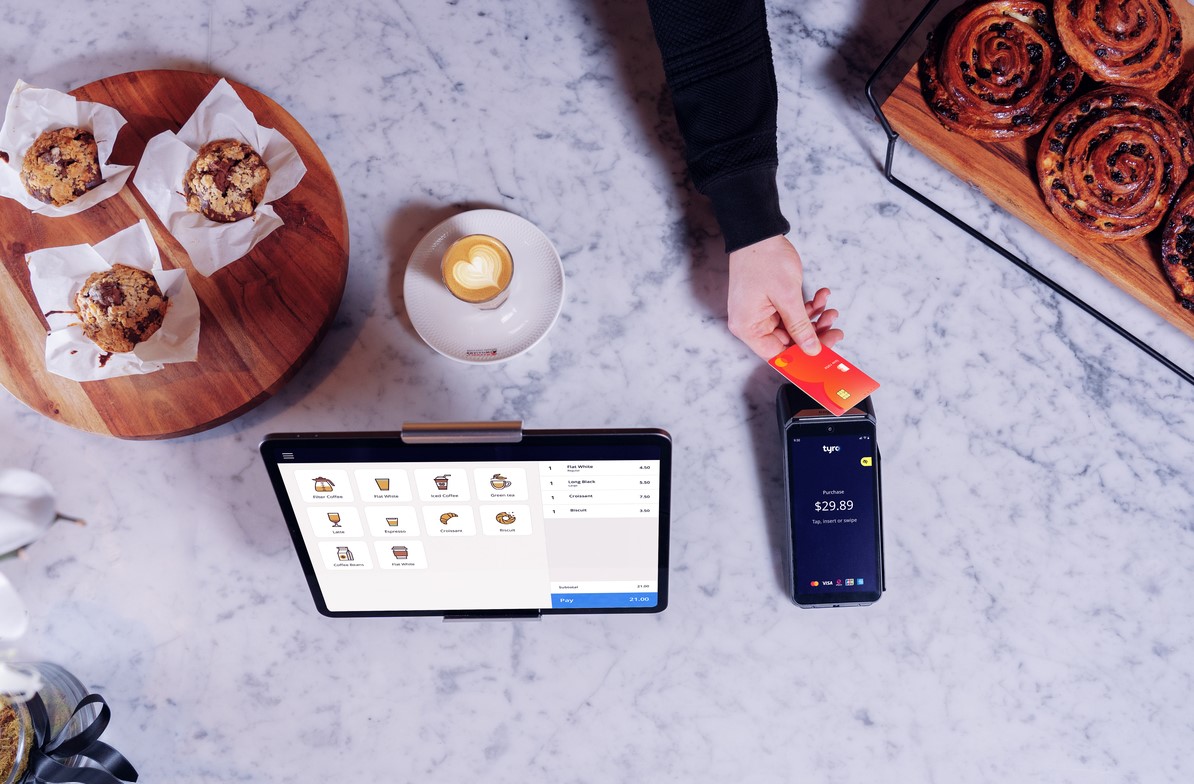
Tyro has a range of solutions that can support businesses in reducing card transaction fees. For example, when it comes to EFTPOS payments, the No Cost EFTPOS ^ feature allows you to cover the costs of taking electronic payments such as machine rental when you transact over $10,000 a month §, transaction fees, and even the cost of paper roll replacement.
A surcharge is automatically added when a customer makes a purchase, essentially reducing the cost of taking an EFTPOS payment to $0 monthly bills ^. This allows you, as a business, to keep a larger portion of the revenue, helping to lower operational costs and increase profitability.
Another benefit of the No Cost EFTPOS feature is that costs are automatically recovered via the machine, reducing the need to rely on internal administrative resources. This in turn also leads to a more slick process which not only reduces operational costs, but improves the efficiency of the business.
There are also no integration, setup, or exit charges, allowing for a clear cut system to take payments and mitigate costs.
In relation to least cost routing, Tyro’s Tap & Save ¤ provides this exact solution. With the simple tap of a customer’s card, eligible transactions are automatically routed to the cheapest available network, reducing the overall transaction fee, directly improving business’s margins and profitability.
Dynamic surcharging is a functionality that automatically calculates and applies a surcharge based on the type of card presented. Rather than applying a single flat rate to all transactions, the surcharge can vary depending on the underlying processing cost of that card.
Tyro’s Dynamic Surcharging δ functionality is built into our EFTPOS machines, enabling businesses to automate surcharge application at the point of sale. However, it remains your responsibility to ensure the configured rates accurately reflect your cost of acceptance.
Read this article to find out if surcharging is right for your business.
Reducing card transaction fees can be an effective way of increasing profitability almost immediately.
Reviewing your pricing model, especially as transaction volumes increase, and least cost routing is often something that merchants may not be aware of, yet can be an effective way to reduce fees.
Surcharging is another approach some businesses use to offset processing costs, provided it is implemented in line with current regulatory requirements.
With Tyro on hand to support, and features such as Tap & Save ¤, and No Cost EFTPOS ^, you can better manage your transaction costs and stay focused on what matters most: growing your business †.
The portable payment solution, with both a touchscreen and glove-friendly keypad.
Australian-based 24/7 support

Complete in under 2mins
For us to find the best solution for you, please answer a few quick questions, and have the following details handy:


 Get the help you need